Cinder Block Calculator: Quantity, Cost, and What You Are Actually Buying
“Cinder block” is the name most homeowners still reach for when heading to the hardware store, even though the coal-cinder aggregate of the original 1920s–1950s blocks was replaced decades ago by ordinary sand and gravel — making today’s product technically a concrete masonry unit. The terminology stuck, and with it came a specific DIY intent: figuring out how many blocks to load in the truck and what the whole project will cost in materials. Getting that count wrong on the low side means a second trip mid-project; getting it wrong on the high side means hauling heavy pallets back for a restocking fee. For the complete block-wall takeoff — blocks, mortar, and grout — see our pillar guide on estimating concrete blocks for a wall.
This cinder block calculator handles both sides of that estimate. Enter your wall dimensions and any openings for gates or vents, and the tool outputs the block count plus mortar bags. Switch into cost mode to add your price-per-block, delivery charge, and labor rate — and you will have a complete project budget before the first bag of mortar is mixed. All calculations use modern CMU nominal dimensions (8 × 8 × 16 standard) because that is what every home center and masonry supplier in the U.S. sells today. To mix the mortar correctly, read our guide on concrete mix ratios; for filled-cell walls, our note on retaining-wall concrete quantities; and to budget materials, our overview of how much concrete costs.
Cinder Block vs. Concrete Block — Spec & Coverage Reference
The terms cinder block and concrete block are used interchangeably at every hardware store in America, but they describe two physically different products. Original cinder blocks — manufactured primarily from the 1920s through the 1950s — used coal cinders, the leftover ash from industrial furnaces, as the aggregate. Those blocks were lighter and more porous than modern masonry units and had lower compressive strength.
Today, coal combustion is rare, and true cinder aggregate is essentially unavailable. Every block sold as a “cinder block” at a U.S. home improvement store is technically a Concrete Masonry Unit (CMU), manufactured from portland cement, sand, and gravel or crushed stone. The ASTM C90 specification governs all load-bearing CMU produced today.
| Characteristic | Original Cinder Block (pre-1960s) | Modern CMU (what you buy today) | Practical Implication |
|---|---|---|---|
| Aggregate | Coal cinders (industrial waste) | Sand, gravel, or crushed stone | Same nominal dimensions; different strength |
| Compressive strength | 600–800 psi (typical) | 1,900+ psi min (ASTM C90) | Modern CMU is significantly stronger |
| Weight (8×8×16) | ~26–28 lb (lighter) | 28–38 lb normal-weight; 22–28 lb lightweight | Lightweight CMU is the modern equivalent |
| Water absorption | Higher — porous cinder aggregate | ≤ 13 lb/ft² max (ASTM C90) | Modern CMU resists freeze-thaw better |
| U.S. availability | Rare — salvage/demolition only | Universal at all home centers | What you buy today is always CMU |
| Cost at home center | N/A (discontinued) | $1.50 – $3.50 per block (2024–25) | Budget 10–15% delivery add-on |
Entering Your Cinder Block Wall Quantities
- 1Select your unit system — imperial (ft/in) or metric (m) for your wall dimensions.
- 2Enter gross wall length and height. These are the outer dimensions of the entire wall face before subtracting any openings.
- 3Choose your nominal block size. Most DIY homeowner projects use the standard 8×8×16; choose 6×8×16 for lighter planters or low decorative screens.
- 4Add any openings — gates, air vents, windows, or decorative cut-outs — with their width and height. The calculator deducts their face area from the gross wall.
- 5Select your waste preset: 10% for a typical first-time DIY project; 5% if you have laid block before; 15% for complex shapes or many cut-to-fit courses.
- 6Set the mortar bag size (80 lb is most common at U.S. home centers; 60 lb if you are mixing by hand to manage the load).
- 7Enter optional cost inputs: price per block (typically $1.50–$3.50), mortar bag price, delivery fee, and hourly labor rate if you are hiring a mason.
- 8Click Calculate to see your total block count, mortar bags required, and an itemized cost breakdown including optional installed-wall cost.
How the Cinder Block Count Is Calculated
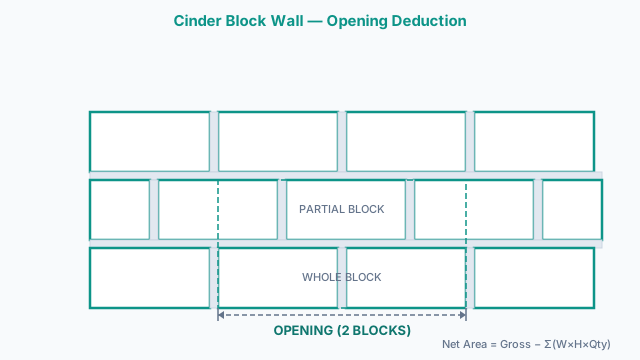
- 1) Net Wall AreaOpening Area = Width × Height × Quantity
Net Wall Area = Gross Wall Area − Sum of All Opening Areas - 2) Block Quantity with WasteBlock Face Area = 0.8889 sq ft (for standard 8×16 nominal face)
Blocks Before Waste = Net Wall Area ÷ 0.8889
Final Blocks = ⌈Blocks Before Waste × (1 + Waste%)⌉ - 3) Mortar BagsBags (80 lb) = ⌈Final Blocks ÷ 13⌉
Bags (60 lb) = ⌈Final Blocks ÷ 9.75⌉Coverage rates assume a standard 3/8″ mortar joint. Thicker joints reduce coverage per bag.
- 4) Total Project CostMaterial Cost = (Final Blocks × $/block) + (Mortar Bags × $/bag) + Delivery
Installed Cost = Material Cost + (Wall Area × Labor $/hr ÷ Blocks per hr)
DIY Cinder Block Wall Cost Guide — U.S. Price Ranges (2024–25)
Material prices vary by region, supplier type (big-box vs. masonry yard), and order quantity. The table below reflects typical U.S. price ranges as of 2024–25 to help you sense-check your project inputs.
| Cost Component | Typical Range (2024–25 US) | Notes |
|---|---|---|
| Standard 8×8×16 CMU block | $1.50 – $3.50 per block | Big-box stores typically at lower end; masonry yards may offer better bulk pricing |
| Lightweight 8×8×16 CMU block | $2.00 – $4.50 per block | Fly-ash aggregate; ~30% lighter, easier to handle for DIY |
| 80 lb mortar bag (Type S) | $7 – $13 per bag | Type S recommended for all exterior and below-grade walls |
| 60 lb mortar bag (Type S) | $6 – $10 per bag | Preferred for hand-mixing by solo DIYers |
| Delivery (pallet, local) | $50 – $200 per trip | Check for 'free local delivery' promotions on large orders |
| Hired mason labor | $15 – $35 per hour | Experienced mason lays 35–50 blocks/hr; add $8–15/hr for a tender |
| DIY labor | $0 (your time) | Beginner pace: 15–25 blocks/hr; improve with practice |
| Concrete strip footing | $5 – $9 per sq ft | See the Concrete Slab Calculator for footing yardage |
Worked Takeoff: Garden Retaining Wall with a Gate Opening
A homeowner wants to build a 20 ft long × 4 ft high garden retaining wall using standard 8×8×16 CMU, with one 3 ft wide × 4 ft high gate opening.
- Gross wall area: 20 ft × 4 ft = 80 sq ft
- Gate opening deduction: 3 ft × 4 ft = 12 sq ft
- Net wall area: 80 − 12 = 68 sq ft
- Blocks before waste: 68 ÷ 0.8889 = 76.5 → 77 blocks
- 10% DIY waste: 77 × 1.10 = 84.7 → order 86 blocks (rounded to full course)
- Mortar (80 lb bags @ 13 blocks/bag): 86 ÷ 13 = 6.6 → 7 bags
- Material cost estimate:
- 86 blocks × $2.25 = $193.50
- 7 mortar bags × $9.00 = $63.00
- Delivery: $75 flat
- Total materials: ~$332 before tax
The gate opening saved roughly 13–14 blocks (about $30–45 in materials) compared to estimating the full 80 sq ft wall. Getting the opening deduction right before you load the truck is the step most homeowners skip — and it is the easiest number to verify against your actual gate dimensions.
Quantity Mistakes in Cinder Block Estimating
- 1.Using actual block dimensions instead of nominal in your own math.Actual manufactured dimensions of an 8×8×16 CMU are 7-5/8″ × 7-5/8″ × 15-5/8″ — 3/8" less in each direction to accommodate the mortar joint. If you measure the actual block face (not the nominal module) when doing manual calculations, you will overcount blocks by roughly 5%. This calculator uses nominal dimensions (the correct method), but be careful if you are cross-checking by hand.
- 2.Assuming all 8×8×16 blocks weigh the same.Normal-weight CMU (stone or dense aggregate) weighs 33–38 lb per block; lightweight CMU (fly ash or pumice aggregate) weighs 22–28 lb. If you are picking up a pallet yourself, a standard 72-block pallet of normal-weight 8" CMU weighs 2,400–2,700 lb — verify your truck or trailer capacity before bypassing delivery. Lightweight blocks cost slightly more per unit but meaningfully reduce job-site handling fatigue.
- 3.Using Type N mortar for an exterior or below-grade garden wall.Type N mortar has a minimum compressive strength of only 750 psi and is appropriate for above-grade interior non-structural walls. Exterior garden walls, retaining walls, and any below-grade application are exposed to freeze-thaw cycles and ground moisture — Type S mortar (1,800 psi minimum per ASTM C270) is required. The cost difference per bag is small; the durability difference over a decade of outdoor exposure is significant.
- 4.Mixing salvage cinder blocks with modern CMU in the same wall.Old true cinder blocks sourced from demolition can be 30–40% weaker and far more porous than modern ASTM C90 CMU. Mixing them into the same wall creates inconsistent strength across courses, uneven mortar absorption, and potential differential settlement. If you want to reuse salvage blocks, keep them in a single isolated section that carries no structural load, and never combine them with new CMU in a course that carries weight.
When to Use the Cinder Block Calculator vs. Related Tools
The cinder block calculator is the right tool when your project is DIY or light-commercial, your primary question is material cost, and you are shopping at a home center rather than reading a structural specification. If your wall must carry floor or roof loads, resist significant lateral earth pressure, or satisfy a seismic reinforcement schedule, switch to the Concrete Block Calculator, which is built around the grout cell scheduling, vertical rebar sizing, and bond beam planning that load-bearing CMU walls require. If you are a trade estimator reading architectural drawings and your main question is how many blocks of each nominal size (4″, 6″, 10″, 12″) land per 100 sq ft — with pallet counts and mortar bag takeoffs — that lookup table lives on the CMU Block Calculator. When your cinder block wall sits on a poured concrete footing strip, the Slab Concrete Calculator estimates the footing concrete volume so you can price the full foundation-to-finished-wall scope in one pass. If a section of the project is stone or brick veneer rather than CMU, the Mortar Calculator gives a standalone mortar volume and bag count for that material.
Manufacturer & Standard References
All modern “cinder blocks” sold in the U.S. are CMU produced to ASTM C90, which defines nominal 8×8×16 inch dimensions, minimum 1,900 psi net area compressive strength, and maximum water absorption — very different from the historical cinder block this name evokes.
Defines mortar types M, S, N, and O with minimum compressive strengths. For outdoor cinder block garden walls, retaining walls, and any below-grade application, Type S (1,800 psi minimum) is the correct mortar — not Type N, which is inadequate for freeze-thaw exposure.
The U.S. masonry building code governs structural design for block walls, including reinforcement, grouting, and seismic detailing. DIY garden walls and planters do not require an engineered design, but retaining walls taller than 4 ft and any wall that carries structural loads are subject to TMS 402.
Salvage cinder blocks may exhibit significantly lower compressive strength and higher water absorption than modern ASTM C90 CMU; confirm unit strength, mortar type, and drainage requirements with a licensed masonry engineer before using salvage material in any load-bearing, below-grade, or retaining-wall application.
Common Cinder Block Questions
Are cinder blocks and concrete blocks the same thing?
Technically, no — but practically, yes for any block you buy today. Original cinder blocks used coal-combustion waste (cinders) as aggregate and were manufactured primarily from the 1920s through the 1950s. Modern blocks sold under the name 'cinder block' at U.S. home centers are concrete masonry units (CMU) made from portland cement, sand, and gravel, produced to ASTM C90. True cinder aggregate blocks are only available as salvage from old demolition projects.
How many cinder blocks do I need for a wall?
Divide the net wall area (length × height minus all openings) by the block face area. For a standard 8×8×16 nominal block, the face area is 0.8889 sq ft, so you need 1.125 blocks per square foot. Add your waste allowance (5–15% depending on layout complexity) and round up to whole blocks. For a 20 ft × 4 ft wall with no openings: 80 sq ft × 1.125 = 90 blocks before waste — with 10% DIY waste, order 99 blocks.
How much does a cinder block wall cost per square foot?
Materials only (blocks + mortar, no labor): typically $3–$7 per sq ft of wall face at 2024–25 U.S. prices using standard 8×8×16 CMU at $2–$3 per block. With hired mason labor ($15–$35/hr at ~40 blocks/hr), the installed cost rises to $10–$22 per sq ft of wall. Decorative concrete block, specialty sizes, and premium mortar mixes increase both material and labor costs. Delivery adds $50–$200 per pallet trip.
How many cinder blocks are on a pallet and how much does a pallet cost?
A standard pallet of 8×8×16 normal-weight CMU holds 72–90 blocks depending on the manufacturer. At $2–$3 per block, a full pallet of 80 blocks costs $160–$240 in materials. Lightweight CMU pallets typically hold the same count but cost 10–20% more per block. Pallet delivery fees range from $50–$200 depending on distance from the supplier.
What is the difference between lightweight and normal-weight cinder blocks?
Normal-weight CMU (stone or gravel aggregate) weighs 33–38 lb per standard 8×8×16 block. Lightweight CMU (fly ash, pumice, or expanded shale aggregate) weighs 22–28 lb — roughly 30% lighter. Lightweight blocks are easier to handle for solo DIYers, reduce dead load on footings, and often have better thermal insulating properties. They cost 10–20% more per block but can meaningfully reduce labor time and fatigue on a project over 100 blocks.
How much mortar do I need for cinder blocks?
One 80 lb bag of Type S mortar covers approximately 13 standard 8×8×16 blocks at a standard 3/8" mortar joint. One 60 lb bag covers roughly 9–10 blocks. These are averages — joint thickness, block surface texture, and mason technique all affect actual yield. For a 100-block project, plan on approximately 8 bags (80 lb) or 11 bags (60 lb), and buy one extra bag to avoid running short at the last course.
What size is a standard cinder block in the USA?
The most common nominal size is 8 × 8 × 16 inches. The actual manufactured size is approximately 7-5/8 × 7-5/8 × 15-5/8 inches — 3/8 inch less in each direction to account for the standard mortar joint, so the nominal module (block + one mortar joint) equals exactly 8" × 16". Other common nominal widths are 4", 6", 10", and 12", all with the same 8" × 16" face.
What is the cheapest way to build a cinder block wall?
The main cost levers are block price, mortar quantity, and labor. For the lowest material cost: buy standard 8×8×16 normal-weight CMU in pallet quantities from a masonry supply yard (usually cheaper per block than big-box stores for orders over 200 blocks). Use 80 lb mortar bags to minimize the bag count. Do the work yourself — DIY labor is free. Minimizing cuts by sizing the wall to module (multiples of 8" height and 16" length) reduces waste from 10–15% to 5% and saves the most blocks per project.
Can cinder blocks be used for a retaining wall?
Standard CMU blocks can be used for low decorative retaining walls (under 3–4 ft of retained height) when properly footed and drained. Walls above 4 ft of retained soil require an engineered design per most local building codes — ASTM C90 blocks with TMS 402-specified rebar, grout, and footing dimensions. For retaining height above 4 ft, use the Concrete Block Calculator to add the structural grouting and reinforcement estimate, and consult a structural engineer before building.
How long does it take to lay cinder blocks for a DIY project?
A beginner homeowner can typically lay 15–25 blocks per hour, including mixing mortar by hand. An experienced DIYer reaches 30–40 blocks/hr. A professional mason typically lays 40–60 blocks/hr with a mortar tender. For a 200-block garden wall, expect 8–14 hours for a first-time DIY builder spread over a weekend — including tool setup, mixing, laying, and cleaning up tooled joints.
What mortar type should I use for an outdoor cinder block wall?
Type S mortar (ASTM C270) with a minimum compressive strength of 1,800 psi is the correct choice for any exterior, below-grade, or garden wall application subject to moisture and freeze-thaw cycling. Type N (750 psi) is too weak for outdoor exposure in freeze climates and should only be used for above-grade interior non-structural walls. Pre-mixed Type S bags are available at all home centers — look for the 'S' designation on the bag.
How do I calculate cinder block cost with delivery and labor?
Start with the block count from the calculator, then: (Blocks × $/block) + (Mortar bags × $/bag) + Delivery fee = material cost. For installed cost, add: (Wall area in sq ft ÷ mason production rate in sq ft/hr) × hourly mason rate. A mason lays about 40 blocks/hr on a standard running-bond wall, covering roughly 35 sq ft/hr. Multiply that time by the hourly rate ($20–$35) to get the labor portion of the installed wall cost.
Can old salvage cinder blocks be reused in a new wall?
Salvage cinder blocks should be used with caution. Original pre-1960s cinder blocks can be 30–40% weaker than modern ASTM C90 CMU and far more porous, making them prone to freeze-thaw spalling. Before reusing them: check for cracks or spalling faces; test absorption (a highly porous block will draw water out of the mortar before it sets); and never mix salvage cinder blocks with modern CMU in the same structural course. They are safest used only for non-structural decorative projects.
Are there lighter alternatives to standard cinder blocks for small planters?
Yes. Lightweight CMU (fly ash or expanded aggregate) weighs 22–28 lb vs 33–38 lb for normal-weight and costs about 10–20% more per block — a worthwhile trade for a planter you are building by hand. Solid concrete bricks (cheaper, no hollow core) work for very low planters but have no hollow core for drainage integration. For decorative raised beds under 2 ft tall, interlocking retaining wall blocks (Allan Block, Versa-Lok) are often the fastest DIY option because they require no mortar.
How do I calculate how many 8×8×16 cinder blocks are in a square foot?
The face area of one 8×8×16 nominal block (including one mortar joint) is 8/12 × 16/12 = 0.8889 sq ft. Dividing 1 by 0.8889 gives 1.125 blocks per square foot. This is the universal figure for all standard 8-high CMU — nominal 4", 6", 8", 10", and 12" wide blocks all have the same 8×16 face, so the 1.125 coverage rate applies to every width.
Should I include a waste percentage when ordering cinder blocks?
Yes, always. Waste occurs from cuts at wall ends and openings, breakage during handling, and layout adjustments. Recommended waste allowances: 5% for experienced masons with minimal cuts; 10% for typical DIY projects with a few corners and openings; 15% for complex layouts, curved walls, or beginners. It is almost always cheaper to buy a small overage upfront than to pay for a second delivery of a partial pallet.
Related Calculators
Concrete Block Calculator
Estimate concrete blocks, mortar, grout, reinforcement, and cost for CMU block walls.
CMU Block Calculator
Estimate CMU block quantity, deduct openings, add waste, and calculate full installed wall cost.
Mortar Calculator
Estimate 80 lb, 60 lb, and 40 lb mortar bag counts for block walls, brick veneer, and stone veneer with ASTM C270 type selection and waste allowance.
Wall Concrete Calculator
Vertical concrete wall volumes, single or multi-segment.
Retaining Wall Calculator
Estimate SRW blocks, drainage gravel, geogrid layers, and installed cost — with IBC 2021 §1807.2.3 compliance checks for walls over 4 ft.