Why Your Gravel Quote Comes in Tons but Your Delivery Truck Thinks in Yards
Quarries sell gravel by the ton because that's how the scale at the weigh station measures it — a loaded dump truck rolls across a certified scale on the way out, and the invoice is written from that number. Landscape yards and most project calculators, on the other hand, talk in cubic yards, because that's the unit that maps directly to a hole, a bed, or a driveway's length × width × depth. Neither party is wrong; they're just measuring two different physical properties — weight and volume — and the only thing that lets you move between them is the material's bulk density.
This Gravel Tons to Yards Calculator does exactly one job: it takes a known quantity in either unit, applies the bulk density of the gravel type you select (or a custom density you enter), and returns the equivalent in tons, cubic yards, and pounds. It does not ask for a project length, width, or depth — for that kind of area-based takeoff, use the Gravel Calculator instead. Use this converter whenever a supplier has already quoted you a figure in one unit and you need it in the other to compare bids, check an invoice, or fill in a purchase order.
Gravel & Aggregate Density Reference for Ton-to-Yard Conversion
Bulk density is the number that bridges tons and cubic yards, and it varies meaningfully by material — a cubic yard of light decomposed granite can weigh 20% less than the same volume of dense crusher run. The table below lists typical bulk densities for common gravel and aggregate types along with the resulting tons-per-cubic-yard conversion factor, calculated the same way the calculator does it: Tons/yd³ = (Density × 27) ÷ 2,000.
| Material | Typical Density (lb/ft³) | Tons per Cubic Yard | In This Calculator |
|---|---|---|---|
| General / Bank-Run Gravel | 105 | 1.42 | Preset — "General Gravel" |
| Pea Gravel | 100 | 1.35 | Preset — "Pea Gravel" |
| #57 Crushed Stone | 105 | 1.42 | Preset — "Crushed Stone" |
| Crusher Run | 110 | 1.49 | Custom Density |
| Decomposed Granite | 90 | 1.22 | Custom Density |
| River Rock | 92 | 1.24 | Custom Density |
| Sand | 96 | 1.30 | Custom Density |
Figures are typical dry, loose-delivery bulk densities and will vary by quarry, particle size, and gradation. The calculator ships with three built-in presets (General Gravel, Pea Gravel, Crushed Stone); every other material in this table — or any material not listed here — should be entered through the Custom Density field using your supplier's certified value.
Converting Your Gravel Tonnage to Cubic Yards
- 1Set your conversion direction with the swap button (the circular arrows icon) beside the quantity field. In "Tons to Yards" mode the field is labeled Input Tons; tap the swap button and it relabels to Input Cubic Yards for "Yards to Tons" mode.
- 2Enter your known quantity in the single quantity field — the tonnage from a supplier's weigh ticket, or the cubic yardage from a coverage estimate. Decimal values such as 7.5 are accepted.
- 3Choose a material from the Gravel Type / Density dropdown: General Gravel (105 lb/ft³), Pea Gravel (100 lb/ft³), or Crushed Stone (105 lb/ft³).
- 4If your material isn't one of the three presets — crusher run, decomposed granite, river rock, sand, or a regional aggregate — select Custom Density and type the bulk density in lb/ft³ from your supplier's spec sheet or the reference table above.
- 5Click Convert. The results panel updates immediately, showing the weight in tons (with the pounds equivalent underneath) above an arrow icon, and the volume in cubic yards below it.
- 6Use the Print button in the results panel to open a one-page summary listing your conversion mode, input quantity, density used, and both converted values — useful for attaching to a purchase order or supplier email.
- 7Run the reverse direction to sanity-check a competing quote: convert a second supplier's stated cubic yardage to tons and compare it against your own tonnage figure for the same job.
How Gravel Tons Convert to Cubic Yards
- 1) Tons per cubic yard from densityTons/yd³ = (Density lb/ft³ × 27) ÷ 2,000
1 cubic yard = 27 cubic feet; 1 US short ton = 2,000 lb. Multiplying the density by 27 gives the weight of one cubic yard in pounds; dividing by 2,000 converts that to tons. This is the exact ratio the calculator computes from your selected or custom density before doing anything else. - 2) Tons to cubic yardsCubic Yards = Tons ÷ (Tons/yd³)
Divide the weight quantity you entered by the tons-per-yard factor to get volume. - 3) Cubic yards to tonsTons = Cubic Yards × (Tons/yd³)
Multiply the volume quantity you entered by the tons-per-yard factor to get weight. - 4) Pounds displayPounds = Tons × 2,000
The calculator always shows the weight result in pounds alongside tons, since some supplier invoices and small-quantity orders are written in pounds rather than tons.
Worked Takeoff: Converting 12 Tons of Crushed Stone to Cubic Yards
A quarry has quoted you 12 tons of #57 crushed stone for a driveway sub-base, and you need to know how many cubic yards that represents to compare against a landscape yard's per-yard price.
- Select the material. Crushed Stone in the calculator carries a built-in density of 105 lb/ft³.
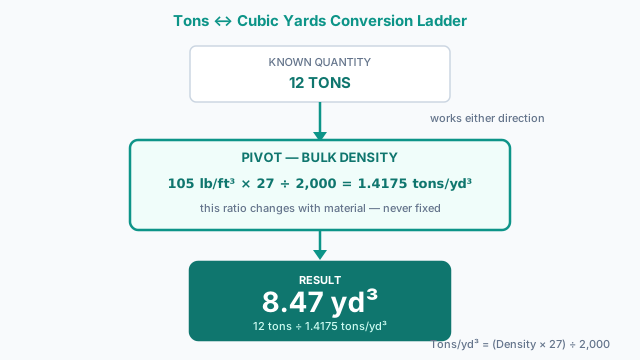
- Derive the tons-per-cubic-yard factor. (105 lb/ft³ × 27 ft³/yd³) ÷ 2,000 lb/ton = 2,835 ÷ 2,000 = 1.4175 tons per cubic yard.
- Convert tons to yards. 12 tons ÷ 1.4175 tons/yd³ = 8.47 cubic yards.
- Check the pounds figure. 12 tons × 2,000 = 24,000 lbs — the value the calculator displays under the tons result.
Now run it the other way. Suppose a second, landscape-yard supplier instead quotes the same driveway job as 8 cubic yards of crushed stone. Toggle the calculator to "Yards to Tons" mode and enter 8:
- Convert yards to tons. 8 yd³ × 1.4175 tons/yd³ = 11.34 tons.
The two quotes are close but not identical — 8.47 yd³ vs. 8 yd³ implied. That 5–6% gap is within normal density variation between quarry batches and is not a red flag. A gap above 15–20% would suggest one supplier is pricing a different material class or using a substantially different density basis, and is worth asking about before you commit to either order.
Conversion Mistakes That Throw Off a Gravel Order
- 1Confusing US short tons with metric tonnes
A US short ton is 2,000 lb; a metric tonne is 2,204.6 lb — about 10% heavier. If a supplier's quote is in metric tonnes and you enter that number as short tons (or vice versa), every conversion carries a 10% error. Confirm the ton type printed on the invoice or quote sheet before typing a number into the calculator.
- 2Using the wrong density preset for the material
General Gravel and Crushed Stone both default to 105 lb/ft³ in this calculator, but Pea Gravel is lighter at 100 lb/ft³, and other common materials — crusher run, decomposed granite, river rock, sand — aren't presets at all and require the Custom Density field. Picking the closest preset instead of the correct density silently shifts every result by 5–20%.
- 3Ignoring moisture content on a wet or recently rained-on stockpile
The density values in this calculator (and on any supplier spec sheet) describe dry, loose material. An outdoor stockpile soaked by rain can weigh 5–10% more per cubic yard than its dry density suggests, meaning a tonnage figure taken from a wet weigh ticket converts to less usable dry volume than the calculator implies.
- 4Reading the swapped field label as the wrong unit
Tapping the swap button relabels the input field between Input Tons and Input Cubic Yards but does not convert the number already sitting in the box. Double-check the field label and the unit badge next to it before hitting Convert, especially if you're re-running the tool for a second supplier quote in the opposite unit.
When to Use the Gravel Tons-to-Yards Converter vs. Other Gravel Tools
Use this Gravel Tons to Yards Calculator when you already have a quantity — from a weigh ticket, a supplier quote, or a prior coverage calculation — in one unit and need it in the other. It takes no project dimensions and does no coverage math; it is a pure density-based conversion.
If you're starting from scratch and need to know how much gravel a project requires, switch to the Gravel Calculator — it takes length, width, and depth and returns cubic yards, cubic feet, and tons in one step, using the same density logic as this converter internally. For a full driveway base-and-surface layer takeoff, use the Gravel Driveway Calculator instead, and for decorative bedding or ground-cover areas sized specifically for smaller aggregate, the Pea Gravel Calculator adds coverage and bag-count outputs on top of the pea gravel density.
Once you know the tonnage or yardage you need, the Gravel Cost Calculator takes that quantity and layers in unit pricing, delivery zones, and labor to produce a full project budget — the natural next step after you've reconciled a ton-vs-yard quote with this converter.
Manufacturer & Standard References
The measurement standard that links volume to weight for aggregate materials. When a supplier cites a bulk density in lb/ft³ for a Custom Density entry, this is the test method most quarries use to produce that certified figure.
Defines the numbered aggregate size classes (#57, #4, and similar) referenced across the industry. Particle size and gradation within a size class directly affect bulk density and therefore the tons-per-cubic-yard factor for that material.
A US short ton equals 2,000 lb — the unit this calculator uses internally and the unit most US quarries and landscape suppliers quote in. A metric tonne equals 2,204.6 lb, about 10% heavier. International or metric-spec suppliers may quote in tonnes; confirm which unit is on the invoice before entering a value, since the two units are not interchangeable without a conversion.
Density values used by this calculator are typical dry, loose-delivery figures. Actual delivered weight can differ due to moisture content, particle gradation, and quarry source. For structural fill or drainage design specifications, obtain a certified bulk density report from your supplier.
Common Gravel Conversion Questions
How many tons is 1 cubic yard of gravel?
It depends on the material. Using this calculator's built-in presets, General Gravel and Crushed Stone (both 105 lb/ft³) convert to 1.4175 tons per cubic yard, while Pea Gravel (100 lb/ft³) converts to 1.35 tons per cubic yard. The commonly cited rule of thumb — "about 1.4 tons per cubic yard" — matches General Gravel and Crushed Stone closely but will overstate weight for lighter materials like decomposed granite or river rock.
How many cubic yards is 5 tons of gravel?
With the General Gravel or Crushed Stone preset (1.4175 tons/yd³): 5 tons ÷ 1.4175 = 3.53 cubic yards. With the Pea Gravel preset (1.35 tons/yd³): 5 ÷ 1.35 = 3.70 cubic yards. Enter 5 in Tons to Yards mode with the correct material selected and the calculator returns the exact figure instantly.
Why does the calculator ask for a gravel type instead of just converting tons to yards directly?
Tons measure weight and cubic yards measure volume — they can only be converted through the material's bulk density, and density is not the same for every gravel type. Selecting a material (or entering a Custom Density) tells the calculator which density to apply so the conversion is specific to what you're actually ordering, rather than an average that could be off by 20% or more.
What do I enter if my gravel type isn't in the dropdown?
Select "Custom Density" from the Gravel Type / Density dropdown, then enter the bulk density in lb/ft³ in the field that appears. Get this figure from your supplier's certified quarry report or spec sheet — the reference table earlier in this article lists typical values for crusher run, decomposed granite, river rock, and sand as a starting estimate if no supplier figure is available yet.
Does this calculator convert to metric tonnes or cubic metres?
No — the calculator works in US short tons (2,000 lb), cubic yards, and pounds only. If you need metric tonnes, multiply the tons result by 0.9072; for cubic metres, multiply the cubic yards result by 0.7646. Always confirm which ton unit your supplier's invoice uses before comparing it to the calculator's output.
My quarry quoted tons and my landscape yard quoted yards — how do I compare them?
Convert both quotes to the same unit using the material's density. Run the quarry's tonnage through this calculator with the correct gravel type to get an equivalent cubic yardage, then compare that figure directly against the landscape yard's cubic-yard quote. If the two don't line up within roughly 5–10%, ask both suppliers to confirm the density basis and material class behind their number.
Why did my delivered gravel weigh more than the calculator predicted?
The most common cause is moisture. This calculator's densities describe dry, loose material; an outdoor stockpile that's been rained on can weigh 5–10% more per cubic yard than the dry figure suggests. A second common cause is a density mismatch — if the actual material is denser than the preset you selected (for example, crusher run entered as General Gravel), the delivered weight will run higher than predicted for the same volume.
Is this the same as the Gravel Calculator?
No. The Gravel Calculator takes project dimensions — length, width, and depth — and calculates how much material a job requires from scratch, returning volume, weight, and often bag count or cost. This converter has no dimension inputs; it only translates a quantity you already know between tons and cubic yards using density. Use the Gravel Calculator to size a job, and this converter to reconcile a supplier's quote once you have a number.
Is the Gravel Tons to Yards Calculator free to use?
Yes. It's free with no account, registration, or usage limit. All calculations run in your browser — nothing you enter is sent to a server or stored.
Can I print or save my conversion result?
Yes. After clicking Convert, use the Print button in the results panel. It opens a formatted one-page summary in a new browser tab showing your conversion mode, input quantity, density used, and both converted values. In your browser's print dialog, choose "Save as PDF" to keep a digital copy for a purchase order or supplier email.
Related Calculators
Gravel Calculator
Calculate gravel volume, tons, cubic yards, and estimated cost.
Gravel Cost Calculator
Estimate total project cost including delivery for gravel projects.
Crushed Concrete Estimator Calculator
Calculate crushed concrete volume, tons, coverage, and total cost with compaction adjustments.
Pea Gravel Calculator
Estimate pea gravel needed for landscaping.
Concrete Weight Calculator
Convert any concrete volume (yd³, ft³, m³) or pour dimensions to weight in lb, short tons, and kg — with normal-weight, lightweight, and bag-mix presets.