Post Hole Concrete, Hole by Hole: Sizing the Annular Fill
The Post Hole Concrete Calculator estimates the exact volume of concrete needed to anchor any individual post — deck footings, pergola columns, mailbox posts, flagpoles, gate posts, basketball poles, bollards, and sign posts. Unlike a fence-run calculator, it works hole-by-hole and handles the annular gap geometry between the hole wall and the post, subtracting post displacement from the gross hole volume so you get a true net fill rather than an inflated over-buy. Accurate hole-by-hole estimation matters most on deck projects (4–9 footings) and pergola builds (4 corner columns) where small errors per hole compound quickly into wasted bags. For set-depth and bag-count guidance aimed at posts, see our pillar guide on how many bags of concrete for fence posts.
The calculator accepts hole diameter or width, hole depth, an optional gravel drainage base, and post cross-section dimensions. It returns volume in cubic feet and cubic yards, bag counts for 40-, 60-, and 80-lb pre-mixed concrete bags, and — in Advanced mode — a full material and labor cost estimate. All bag counts round up to the nearest whole bag so you never arrive on site one bag short. For every bag-counting method in one place, see our concrete bag calculation hub; for the general how-many-bags question, how many bags of concrete you need; and for the no-mix shortcut, our guide to the dry pour concrete method.
Post Hole Application Reference: Hole Size & Depth by Project
Typical hole dimensions and embedment depths by application. Nominal lumber sizes are listed — enter the actual post dimension when computing displacement (4×4 = 3.5″; 6×6 = 5.5″).
| Application | Typical Post | Hole Dia. | Hole Depth | Notes |
|---|---|---|---|---|
| Deck footing | 4×4 or 6×6 wood | 12″–16″ | 36″–48″ | Must extend below frost line; confirm with IRC Table R301.2(1) and local code |
| Pergola column | 6×6 wood | 16″–20″ | 36″–48″ | Deeper footings for tall (> 10 ft) pergolas carrying wind load |
| Gate post | 6×6 wood | 14″–18″ | 36″–48″ | Wider and deeper than line posts to resist swing and lateral wind loads |
| Mailbox post | 4×4 wood | 8″–10″ | 24″–30″ | Light load; check local setback and height regulations |
| Flagpole (residential) | 4″–6″ OD steel pipe | 12″–16″ | 36″–48″ | Bury 1/5 to 1/4 of pole height; anchor bolts recommended for taller poles |
| Basketball pole | 3.5″ OD steel pipe | 10″–12″ | 30″–42″ | Always follow manufacturer's embed specification — varies by brand |
| Sign post | 4″×4″ steel or wood | 10″–12″ | 30″–36″ | Engineer required for signs > 32 ft²; wind load governs depth |
| Parking bollard | 6″ OD steel pipe | 16″–20″ | 36″–42″ | Concrete-filled post preferred for vehicle impact resistance |
Depths are starting points only. Always verify against local frost-line maps and consult a licensed structural engineer for posts that carry roof or deck loads.
Entering Your Post Hole Quantities
- 1Select a project type preset — Deck Footing, Gate Post, or Mailbox Post — to load sensible defaults for hole diameter, depth, and post size. You can adjust any value after selecting a preset.
- 2Choose the hole shape: Round (cylindrical) for auger-drilled holes, or Square / Rectangular for hand-dug or backhoe-cut holes.
- 3Enter the hole diameter for round holes, or width and length for square holes. A common starting rule: the hole should be at least 3× the actual post width. A 4×4 post (3.5" actual) calls for a 10"–12" hole; a 6×6 (5.5" actual) calls for a 14"–16" hole.
- 4Enter hole depth. The hole must reach at or below the local frost line per IRC R403.1.4. In most of the continental US this is 24"–48" depending on your climate zone. The calculator flags if your depth may be insufficient.
- 5Enter the number of holes. Deck projects typically use 4, 6, or 9 footings; pergola corners use 4; mailbox and flagpole projects are usually 1.
- 6Toggle the gravel base option and set the gravel depth (4–6 inches is standard). The calculator estimates gravel volume separately and subtracts the gravel layer from the concrete fill depth.
- 7In Advanced mode, enter post shape (round or square) and the actual cross-section dimensions for post displacement subtraction. Note: a 4×4 lumber post is actually 3.5" × 3.5"; a 6×6 is actually 5.5" × 5.5".
- 8Set the waste percentage (default 10%). This covers spillage, irregular hole walls, and bags mixed early before the form is ready.
- 9Click Calculate. Review the hero volume result, the per-hole breakdown, and the bag comparison table showing all three bag sizes.
How the Post Hole Concrete Volume Is Calculated
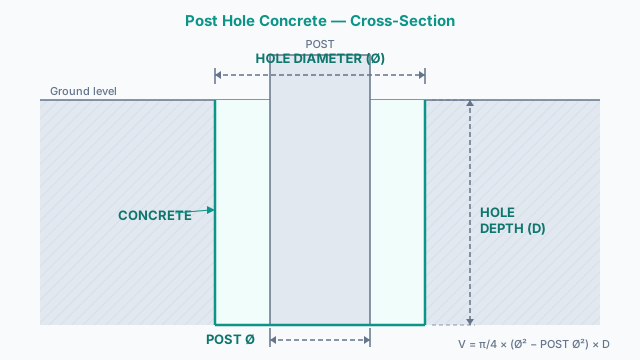
- 1) Round Hole Volume (Cylinder)Vhole = π × (Diameter ÷ 2)² × Concrete Fill Depth
Concrete Fill Depth = Hole Depth − Gravel Base Depth. For a 12-inch hole 36 inches deep with a 4-inch gravel base: V = π × (6 in)² × 32 in = 3,619 in³ = 2.094 ft³. - 2) Square / Rectangular Hole VolumeVhole = Width × Length × Concrete Fill Depth
Used for hand-dug or backhoe-cut holes where the cross-section is roughly rectangular rather than circular. - 3) Post Displacement — Round PostVpost = π × (Post Diameter ÷ 2)² × Embed Depth
Subtracts the cylindrical volume occupied by a round post or steel pipe. - 4) Post Displacement — Square / Rectangular PostVpost = Post Width × Post Length × Embed Depth
For a 4×4 post (3.5" × 3.5" actual) embedded 32 inches: V = (3.5/12) × (3.5/12) × (32/12) = 0.0851 × 2.667 = 0.227 ft³ per post. - 5) Net Concrete Per HoleVnet = max(0, Vhole − Vpost)
The max(0, …) guard prevents a negative result if post dimensions are accidentally entered larger than the hole. - 6) Total Volume with Waste & Bag CountVtotal = (Vnet × Number of Holes) × (1 + Waste% ÷ 100)
Bags = ⌈ Vtotal ÷ Yield Per Bag ⌉
Standard yields: 40 lb = 0.30 ft³ · 60 lb = 0.45 ft³ · 80 lb = 0.60 ft³. All bag counts round up to the nearest whole bag so you never arrive short.
Worked Takeoff: 4 Pergola Corner Footings
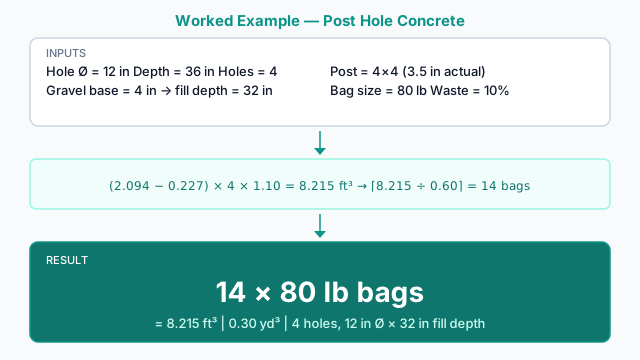
You are setting four corner posts for a 10 × 12 ft backyard pergola. Each post is a 4×4 (actual 3.5″ × 3.5″). You have drilled 12-inch diameter holes 36 inches deep and plan a 4-inch gravel base in each hole.
- Concrete fill depth = 36″ − 4″ = 32 inches (subtracting the gravel layer)
- Hole volume = π × (6 in)² × 32 in = 3,619 in³ = 2.094 ft³ per hole
- Post displacement = (3.5/12) ft × (3.5/12) ft × (32/12) ft = 0.0851 ft² × 2.667 ft = 0.227 ft³ per post
- Net concrete per hole = 2.094 − 0.227 = 1.867 ft³
- 4 holes total = 4 × 1.867 = 7.468 ft³
- 10% waste factor = 7.468 × 1.10 = 8.215 ft³ ≈ 0.30 yd³
- 80 lb bags needed = ⌈8.215 ÷ 0.60⌉ = 14 bags
Skipping post displacement subtraction inflates the estimate to 16 bags — two bags and roughly $14–18 wasted. On a larger deck with 8 footings, the displacement savings double. The calculator works through all six steps in under two seconds, and the Print / Save button exports a formatted bag list you can bring directly to the hardware store.
Quantity Mistakes That Leave a Post Hole Short
- 1Using nominal lumber sizes instead of actual dimensions
A '4×4' post measures 3.5" × 3.5" and a '6×6' measures 5.5" × 5.5". Entering nominal dimensions overstates post displacement and understates the concrete needed — especially at larger post sizes where the gap between nominal and actual is most significant.
- 2Treating the hole as completely empty
Many contractors estimate concrete by ignoring the post volume. For a 6×6 post in a 12-inch hole at 36 inches deep, neglecting displacement means over-buying 0.74 ft³ per hole — about 1.2 bags of 80 lb concrete. Across 8 footings, that's nearly 10 extra bags ordered.
- 3Digging above the local frost line
Frost heave lifts footings that don't extend into undisturbed soil below the frost penetration depth. IRC R403.1.4 requires footings to reach the frost line. In USDA zones 5–7, this can be 36–48 inches. Check your local building department before digging — undersized depth is the most common reason post footings fail inspection.
- 4Pouring concrete into standing water or frozen soil
Water in the hole dilutes the cement paste and weakens the collar; frozen soil prevents the concrete from bonding to the hole wall. Pump or bail standing water before pouring. In persistently wet soil, wait 24 hours for drainage or use a fast-setting mix rated for wet conditions.
When to Use the Post Hole Calculator vs. Related Tools
Use this Post Hole Concrete Calculator when you know your hole count and each hole's specific dimensions — it is designed for individual-hole applications: deck footings, pergola columns, mailbox posts, gate posts, flagpoles, bollards, and sign posts. Post displacement is handled per hole and the gravel base layer is subtracted from the fill depth for maximum accuracy per hole.
Switch to the Fence Post Concrete Calculator when you are planning a fence run: that calculator takes total fence length and on-center post spacing, automatically determines how many posts you need (including the terminal end post), then totals the concrete for the entire run in one step. It also includes Privacy, Picket, and Farm fence presets that load common spacing and hole-size defaults.
For deep drilled shaft or pier applications exceeding a few feet in diameter, the Pier & Caisson Concrete Calculator handles bell enlargements and shaft taper geometry that fall outside a standard post hole. If the gravel base material cost is a significant budget line, cross-check quantities with the Gravel Calculator to convert gravel layer volume directly to tons for ordering. And before buying bags, confirm yield assumptions for your specific brand with the Concrete Bag Calculator.
Manufacturer & Standard References
Requires footings for posts supporting decks, pergolas, and outbuildings to bear on undisturbed soil and extend below the local frost penetration depth per Table R301.2(1). This is the primary code basis for the frost-line warning this calculator generates when your hole depth falls short of the value you enter for local frost depth.
Guides mix proportioning for post hole concrete. For deck and pergola footings, a 3,000–4,000 PSI mix per ACI 211.1 provides adequate compressive strength and durability in ground-contact, freeze–thaw conditions. The standard's water-to-cement ratios inform the minimum mix quality needed at the frost line where long-term moisture exposure is highest.
Covers the 40-, 60-, and 80-lb pre-mixed concrete bags most commonly used for post hole setting. The standard specifies minimum yield per bag and minimum 28-day compressive strength — the yield figures (0.30, 0.45, and 0.60 ft³ respectively) are used directly by this calculator's bag count formulas.
Post-hole concrete must not be poured into frozen soil or standing water. A concrete collar isolated from the post with a sleeve or wrap reduces frost-heave uplift force on the post — consult a licensed structural engineer for post installations that carry roof or deck loads.
Common Post Hole Questions
What is a post hole concrete calculator?
A post hole concrete calculator estimates the volume of concrete needed to fill the annular space between the wall of a drilled or dug hole and the post placed inside it. You enter hole diameter, hole depth, the number of holes, and optionally post dimensions — and the calculator returns cubic feet, cubic yards, and bag counts for 40-, 60-, and 80-lb bags. It is used for deck footings, pergola columns, gate posts, mailbox posts, flagpoles, basketball poles, bollards, and any other application where a post is set in concrete.
How is this different from the fence post concrete calculator?
This Post Hole Concrete Calculator works hole-by-hole: you specify each hole's diameter and depth directly, then scale by the number of identical holes. The Fence Post Concrete Calculator adds a fence-layout layer — you enter total fence length and post spacing, and the calculator auto-determines the post count (including the terminal end post). Use this calculator when each hole has defined dimensions; use the fence post calculator when you're planning a full fence run and want the post count computed automatically from layout dimensions.
How much concrete does a single post hole need?
It depends on hole size, hole depth, gravel base depth, and post size. As a reference: a 12-inch diameter hole, 36 inches deep, with a 4-inch gravel base and a 4×4 post (3.5" actual) requires approximately 1.87 cubic feet of concrete — about 3 bags of 80 lb pre-mixed concrete. A larger 16-inch hole, 48 inches deep, with a 6×6 post and a 4-inch gravel base needs roughly 5.1 cubic feet — about 9 bags of 80 lb. Use the calculator with your exact dimensions for a precise figure.
What is annular fill volume and why does it matter?
Annular fill volume is the concrete volume in the ring between the hole wall and the post — it equals the hole's gross volume minus the post's displacement volume. Most rule-of-thumb bag counts treat the hole as completely empty, which over-estimates by 5–30% depending on post size and hole diameter. For a 6×6 post in a 12-inch hole at 36 inches deep, the displacement is about 0.73 cubic feet — roughly 1.2 bags of 80 lb concrete per hole. Subtracting displacement accurately saves real money across 4–9 deck footings.
What hole diameter should I use for a 4×4 post?
The standard recommendation is a hole diameter at least three times the actual post width. A 4×4 lumber post measures 3.5 inches actual, so 3 × 3.5 = 10.5 inches — meaning a 10- or 12-inch hole is appropriate. A 12-inch hole gives a thicker concrete collar for better lateral resistance, which is recommended for deck posts and gate posts that carry more load or swing force than a standard fence line post.
What hole diameter should I use for a 6×6 post?
A 6×6 post measures 5.5 inches actual. Applying the 3× rule gives 16.5 inches, so a 16-inch hole is typical for gate posts, deck footings, and pergola columns using 6×6 lumber. For pergola columns or any post carrying a roof load, consult your local building code — some jurisdictions specify 18 or 20 inches for load-bearing columns. A 16-inch hole at 42 inches deep with a 6×6 post and a 4-inch gravel base requires approximately 4.9 cubic feet of concrete per hole.
How does frost depth affect post hole depth?
Frost heave occurs when water in the soil freezes and expands, lifting footings upward. IRC R403.1.4 requires footings to bear on undisturbed soil at or below the local frost penetration depth. In USDA Zone 5 (Chicago, Denver), frost can penetrate 42–48 inches; in Zone 7 (Atlanta, Dallas), it's typically 6–12 inches. This calculator flags holes that may not extend below the frost depth you enter. Check your municipality's frost depth map or building department for the code-required value for your location.
Should I use a gravel base in my post hole?
Yes for most applications. A 4–6 inch compacted gravel layer at the bottom of each hole improves drainage, preventing water from pooling around the post foot and causing accelerated wood decay. It also provides a stable bearing surface and keeps the concrete from sitting in standing water. The calculator's gravel base estimator shows how much gravel to order and deducts the gravel layer from the concrete fill depth so both materials are estimated accurately.
How do I calculate concrete for deck footings?
Enter your footing hole diameter (typically 12–16 inches), hole depth (below local frost line, usually 36–48 inches), and the number of footings (commonly 4, 6, or 9 for a residential deck). If using concrete tube forms (Sonotubes), the hole diameter equals the tube diameter. In Advanced mode, enter your 4×4 or 6×6 post dimension to subtract displacement. For a typical 4-footing deck (12-inch holes, 42 inches deep, 6×6 posts, 4-inch gravel base), expect approximately 20–26 bags of 80 lb concrete.
What concrete mix should I use for post holes?
For residential deck footings, pergola columns, and gate posts, use a 3,000–4,000 PSI concrete mix per ACI 211.1. Standard Quikrete Concrete Mix (#110) and Sakrete High Strength Concrete achieve approximately 4,000 PSI at 28 days, which meets or exceeds typical residential code requirements. For posts in sustained soil contact and freeze–thaw exposure, specify an air-entrained or fiber-reinforced mix for improved durability at the frost line.
Can I use fast-setting concrete for post holes?
Yes. Products like Quikrete Fast-Setting Concrete (#1004) or Sakrete Fast-Setting Concrete Mix let you pour dry mix directly into the hole around the post and add water on top — no mixing required. This is IRC-compliant for residential mailbox posts and light fence posts and reaches working strength in 20–40 minutes. However, mix the concrete conventionally (wet) for structural applications such as deck footings, pergola columns, and gate posts where full 28-day compressive strength is critical.
How do I estimate bags for a mailbox post?
A standard mailbox post uses a 4×4 (3.5" actual) in an 8–10-inch diameter hole, 24–30 inches deep, with no gravel base needed for this light load. For a 10-inch hole 24 inches deep: V_hole = π × (5 in)² × 24 in = 1,885 in³ = 1.09 ft³. Post displacement ≈ 0.14 ft³. Net = 0.95 ft³. With 10% waste = 1.05 ft³. At 0.60 ft³ per 80 lb bag: 2 bags. One 80 lb bag covers the smallest setups; two gives comfortable coverage with minimal leftover.
Is the post hole concrete calculator free?
Yes, completely free. No account, subscription, or usage limit. You can also export your estimate as a PDF using the Print / Save button at no cost — useful for taking the bag list to the hardware store or keeping in your project records.
Can I save or print my estimate?
Yes. After clicking Calculate, a Print / Save button appears at the top of the results section. It opens a formatted printout in a new browser tab containing all your inputs, per-hole volume, total volume, and bag counts for 40-, 60-, and 80-lb bags. In your browser's print dialog, select 'Save as PDF' to keep a digital copy for your project file or to share with a supplier.
How accurate is the post hole concrete calculator?
The calculator uses exact cylindrical and rectangular volume formulas with precise post displacement subtraction, so the math is accurate to the inputs you provide. Real-world accuracy depends on how precisely your holes are drilled — hand-dug holes or worn auger bits often produce irregular walls that add 5–15% more volume than the nominal diameter. Including a 10% waste factor accounts for this field variability and ensures you don't run short mid-project.
Related Calculators
Concrete Bag Calculator by Project
Turn slab, footing, post hole and sonotube dimensions into an exact bag count — five shape modes, imperial or metric, with +5%/+10% waste buffers.
Fence Post Concrete Calculator
Calculate concrete bags and volume for fence posts by total fence length and post spacing, with post displacement subtraction and IRC depth check.
Sonotube Concrete Calculator
Volume, cubic yards & bag counts for cylindrical tube forms.
Pier / Caisson Concrete Calculator
Cylindrical shafts and drilled piers by length.
Gravel Calculator
Calculate gravel volume, tons, cubic yards, and estimated cost.